TL;DR
App builders like v0 and Lovable are generation-first tools: superb at turning a prompt into a working app, thinner on what your team does with it next. Their preview and deploy links show the app; they don't collect element-level feedback from a client, let a non-prompting teammate fix copy, or answer "what did we show them last week?". The fix is the same as for chat-based tools: separate building (stay in the builder) from reviewing (one live, commentable, versioned link).
What the builders give you, and where it stops
v0, Lovable, and their peers took the artifact idea further than chat tools: full multi-page apps, deployable, sometimes with team seats for co-building. If your whole team prompts, that covers the making side well.
The gap is the audience side, and it's the same ceiling as every vendor share: the preview link is view-only; reactions land in Slack as prose ("the pricing card, the middle one, feels cramped"); the client certainly isn't getting a builder seat; and iteration speed (the builders' superpower) means the version your reviewer opened this morning may already be stale, with no record of what they saw. Feedback scatters, and every wording fix routes through whoever prompts.
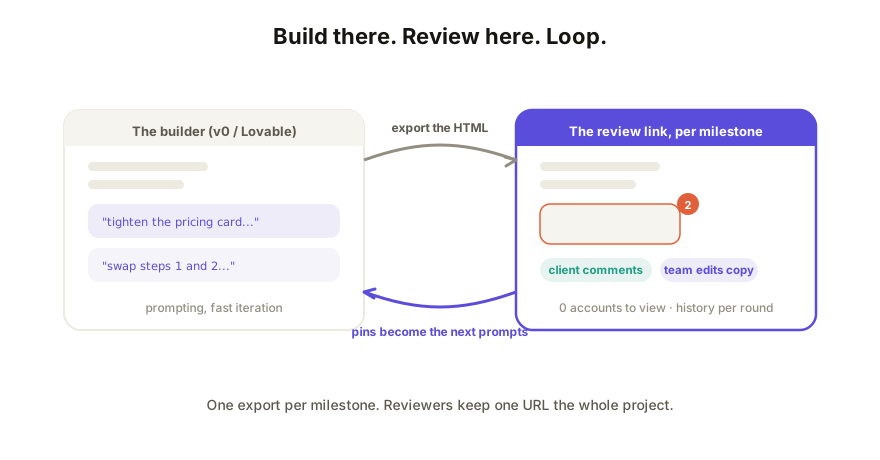
The pattern: build there, review here
Keep the builder as the workshop and give each review round a stable, collaborative address:
- Export or copy the app's output at the milestone you want reviewed. For review purposes you want the rendered page (HTML) the builder produces (why single-file HTML travels best).
- Publish it to a collaboration link. Now the review copy is live and interactive, opens for anyone with no account, and takes comments pinned to elements.
- Let the words people fix the words. Copy edits, label changes, style tweaks happen directly on the review copy, no builder seat required, all of it in version history.
- Fold changes back into the builder for the next build round: pinned comments become your prompt list, and direct edits tell you exactly what the team wanted.
- Republish to the same link at the next milestone. Reviewers keep one URL; history keeps what each round looked like.
The loop costs one export per milestone. It buys you feedback that arrives attached to the thing, an audit trail per review round, and clients who participate through a browser instead of a builder account.
Why not just deploy and share the deploy link?
Deploying from the builder (or to your own domain) is the right shipping move, and the wrong review move: a deployed URL is still view-only for feedback purposes: no comments, no non-coder edits, no per-round history. Deploy when it's done; review on a surface built for reviewing. Many teams run both at once: production on the deploy URL, review rounds on the collaboration link.
Mixed-tool teams, same funnel
The quiet advantage of separating review from building: it makes the builder swappable. This week's landing page from Lovable, last week's dashboard from a Claude artifact, a v0 prototype tomorrow: all of them review at the same kind of link, with the same loop, whatever generated them. Your team learns one review habit instead of one per tool.
How Coedit fits
Coedit is the review-and-collaborate half of this pattern: paste the HTML your builder produced and share one live link where viewing and commenting need no account, comments pin to the element they're about, teammates edit copy and styling without code, and every round lands in one version history with rollback. It doesn't compete with v0 or Lovable on building (it generates nothing); it's where their output meets the rest of your team.
FAQ
Q: Can my client leave feedback directly on a v0 or Lovable app? A: Not element-by-element through the builders' own links, which are view-only. Publish the app's HTML to a collaboration surface and they can click the exact element and comment there, no account needed.
Q: Doesn't exporting break the builder's iteration loop? A: No, because the export is per-milestone, not per-edit. You keep iterating in the builder as fast as ever; the collaboration link is the stable checkpoint reviewers see, and their feedback comes back as your next round of prompts.
Q: We deploy from the builder already. Why another link? A: A deployed URL distributes the app; it doesn't collect feedback, allow non-coder edits, or keep review history. Production link for shipping, collaboration link for the rounds that get it there.
Q: What if part of the team uses Claude or ChatGPT instead? A: That's the argument for a tool-agnostic review surface: everything these tools produce is HTML underneath, so one funnel reviews all of it the same way.