TL;DR
Prototypes exist to be reacted to, and AI broke the old ratio: building now takes minutes while collecting the reactions still takes days of screenshots, threads, and a meeting to reconcile them. Fix the review half: put the prototype at one live link, let people use it (not view pictures of it), collect comments on the prototype itself, apply the small fixes in place, and close the round with a decision recorded against a version. One afternoon, no meeting.
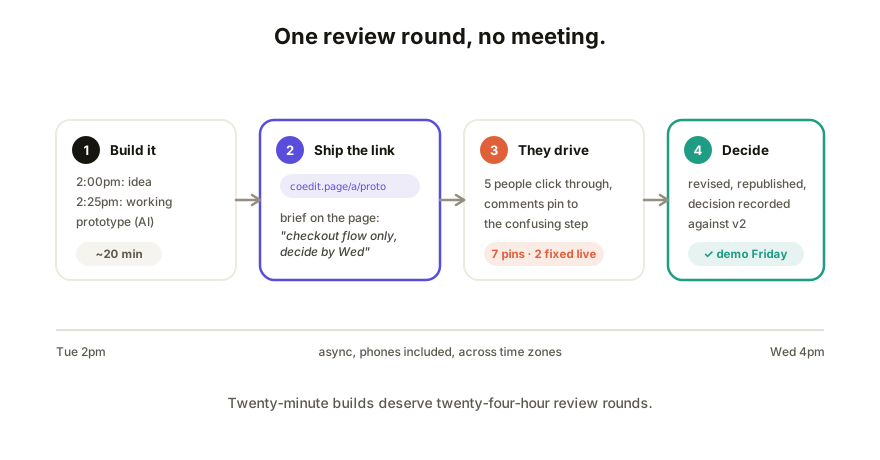
The new bottleneck
You had the idea at 2pm; by 2:25 Claude or v0 had produced a working prototype (an artifact). Then the old machinery kicks in: screenshots into Slack, "thoughts?", a trickle of reactions describing parts of a picture (the describing problem), a meeting on Thursday to sort out what everyone meant, and by then you've rebuilt it twice so half the feedback is about a version that no longer exists.
The build-to-feedback ratio inverted. Twenty-minute prototypes deserve twenty-four-hour review rounds, and the only thing in the way is process built for slower artifacts.
Running a real review round
1. Ship the prototype to a live link, not a thread. Export the HTML and publish it to a collaboration surface. A prototype's entire information content is in its behavior: the flow, the states, the feel. A screenshot deletes exactly that, and the file version breaks on arrival. The link opens for everyone, no accounts, phones included.
2. Frame the round in one sentence, on the page. "Reviewing the checkout flow; ignore colors; decide by Wednesday." Put it at the top of the prototype itself, where reviewers are, not in a message they'll scroll past. Scoped rounds converge; open-ended "thoughts?" rounds don't.
3. Collect reactions on the thing. Reviewers click the element they mean and comment there. Ambiguity dies ("this button" is this button), reactions accumulate in one place instead of per-channel, and late reviewers see earlier comments instead of repeating them: the async meeting, minus the meeting.
4. Fix the small stuff in place; batch the big stuff. Typos, labels, spacing: whoever spotted it fixes it directly, no round trip. Structural notes ("what if step two came first?") batch into your next AI iteration, and the pinned comments are the prompt list, already sorted by element.
5. Close the round against a version. Republish the revised prototype to the same link; history records what round one looked like and what changed. The decision ("shipping this to the client demo" or "killing it") attaches to a specific version, which is what makes prototype decisions stick instead of reopening weekly.
Then loop: next round, same link, reviewers already know where it lives.
Why not just demo it in a meeting?
Demos serve narration, and they have their place: you control the path, you sell the vision. But a demo reviews your tour of the prototype, not the prototype; nobody finds the confusing state you didn't click into. Letting people drive finds the truth faster, async, across time zones, and the meeting you still hold gets to be about the decision instead of the walkthrough. (For client-facing prototype reviews, add your own domain and invite-only access; the round works the same.)
How Coedit fits
Coedit is the review surface this pattern assumes: paste the prototype HTML from any tool (Claude, ChatGPT, Gemini, v0, Lovable) and get one live link where reviewers use the real thing with zero accounts, comments pin to elements, small fixes happen in place with no code, and every round lands in version history with rollback. The prototype came from your AI in minutes; Coedit makes the feedback move at the same speed.
FAQ
Q: What's the best way to get feedback on an AI-built prototype? A: Share the working prototype at a live link and collect comments on the page itself, scoped by a one-line brief. People react to what they can actually operate; pictures and demos hide exactly the problems prototypes exist to find.
Q: How do I keep prototype feedback from sprawling? A: Scope the round (what's being reviewed, what's out of bounds, when it closes) and anchor all comments to the artifact. Sprawl comes from open-ended asks in unanchored channels.
Q: Reviewers keep reacting to an outdated version. How do I stop that? A: Stop distributing copies. One live link means there's only ever the current version to react to, and version history preserves the old rounds for reference instead of circulation.
Q: Should the whole team be allowed to edit the prototype? A: Let anyone fix words and styling; rollback makes it safe. Keep structural iteration with whoever runs the AI, fed by the pinned comments. The split keeps speed without chaos.