TL;DR
On September 16, 2026 Claude changed what an artifact is, and with it how sharing works. New artifacts can be shared with specific people, your organization, or "anyone with the link," at three levels: view, comment, or edit. That is real collaboration, and it is newer than most of what is written about Claude artifacts (including our own earlier version of this post). The catch moved. For a new artifact, "anyone with the link" means anyone signed in to Claude, and outside invitees need a Claude account too. A client with no account still can't open it. The no-account public link survives only for legacy artifacts (made before September 16) and for Claude Code artifacts.
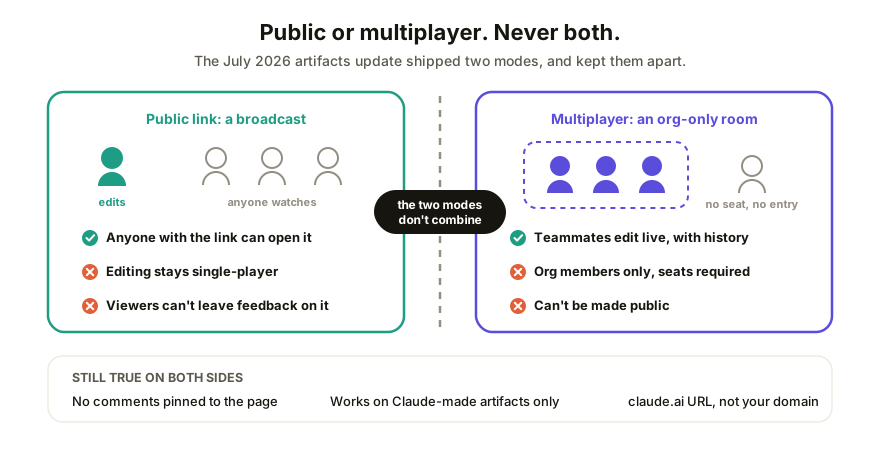
What changed on September 16
Anthropic's release notes for that date describe the change as asking for "a design, deck, or document in any conversation," with Claude Design, Claude Slides and Claude Docs available on every plan, Free included. The Help Center's artifacts article defines an artifact as "anything Claude makes for you that you'd put in front of someone: a design, a deck, a document, a dashboard, or a small interactive tool." It also draws the line that matters for sharing: artifacts made in a chat before September 16 are legacy artifacts. They keep working and can still be published, but you can't make new ones.
The sharing rules, from the Share artifacts page as we read it on September 30, 2026:
- Private by default. "Artifacts start private to you. Nothing is shared until you share it."
- Three audiences for new artifacts. Specific people by email (beta), your organization (Team and Enterprise), and "Anyone with the link," defined as "anyone signed in to Claude who has the link."
- Three roles. Can view. Commenter: "everything in Can view, plus add comments and download any files the artifact offers." Can edit: "everything in Commenter, plus make changes."
- Outside your org, with limits. You can invite up to 50 people from outside your organization per artifact. They can't invite others or change sharing settings.
- Team and Enterprise owners hold a switch. If an Owner turns off External sharing, "anyone with the link" stops working unless the Owner allows that artifact individually.
- Some artifacts can't leave the org by link. Artifacts that connect to apps, use Claude features inside the page, or are Claude Docs stay inside the organization.
- Legacy artifacts keep the old public link. On Free, Pro and Max, a published legacy artifact can be opened and used by anyone with the link, with no Claude account.
Claude Code artifacts follow their own documented rules: a public link that anyone can open with no sign-in (off by default on Team and Enterprise until an Owner enables it), Team and Enterprise editors, and comments for people inside your organization. People who only hold the public link can't see or add comments.
What this fixes, and what it doesn't
Comments and edit roles are the two things we said were missing. They are there now, and for a team where everyone already has Claude, they are good. Here is the honest before and after:
| You want | Claude artifact, new rules | Still a gap? |
|---|---|---|
| Teammates comment on the page | Yes, for people signed in to Claude | Only for people with no account |
| Someone else edits it | Yes, with the Can edit role | Only for people with no account |
| A client opens the link and looks | Only if they sign in to Claude (legacy and Claude Code links excepted) | Yes |
| A client with no Claude account comments | No | Yes |
| Feedback pinned to an exact element on the page | Commenting exists; element-level pinning isn't something we could confirm | Unverified |
| Works on output from ChatGPT, Gemini, v0, Lovable, or hand-written HTML | No, Claude-made only | Yes |
| Your own domain | No, the link lives on claude.ai | Yes |
We did not find anything on the current Help Center pages that describes several people typing in one artifact at the same instant. Earlier coverage (and our own July version of this post) reported real-time multiplayer editing for Team and Enterprise. Treat that as unconfirmed until you see it in your own workspace.
The walls that are left
- The account wall. Every new-artifact audience is "people who are signed in to Claude." Invitees need an account on the invited email. A client, a prospect, or a contractor who doesn't use Claude is outside all of it.
- Claude-generated only. The roles apply to artifacts Claude built. A ChatGPT canvas, a Gemini app, a v0 or Lovable export, or a page written by hand gets none of it. Real teams use more than one tool.
- Claude's domain, not yours. The link is a claude.ai URL. There's no custom domain and no way to put a client deliverable under your own brand.
- Some artifacts can't cross the org line. App-connected and Claude-feature artifacts and Claude Docs can't be shared outside the organization by link.
How Coedit fits
Keep making things in Claude, and use the new roles for what they're good at: your team, all signed in, commenting and editing inside Claude. When the audience includes people who hold no Claude account, that's the handoff. Export the artifact's HTML (it's a plain web page, and it's yours) and paste it into Coedit. You get one link anyone can open with no account, comments pinned to the exact element, no-code editing for the people you allow, and one version history across every human and agent change, with rollback. On a paid plan it carries your own domain. It works the same whether the page came from Claude, ChatGPT, Gemini, v0, Lovable, or your own hands. Coedit never generates anything. Claude is the best place to make the thing. Coedit is where it meets everyone who isn't in your Claude account.
FAQ
Q: Can I share a Claude artifact publicly now? A: It depends on when it was made. Artifacts created after September 16, 2026 share with specific people, your org, or "anyone with the link," which requires the viewer to be signed in to Claude. Legacy artifacts (made before that date) can still be published to a link anyone can open with no account. Claude Code artifacts can go to a public link with no sign-in, once an Owner enables it on Team and Enterprise.
Q: Can other people comment on or edit my Claude artifact? A: Yes. The Commenter and Can edit roles exist for new artifacts. The people have to be signed in to Claude, and invitees from outside your organization (up to 50 per artifact) need a Claude account on the email you invite.
Q: Can a client who doesn't use Claude view, comment on or edit my artifact? A: Not through a new artifact's link or invitation, because both need a Claude sign-in. The exceptions are legacy published artifacts and Claude Code public links, where they can view. Reaching people with no account is what a tool-agnostic layer like Coedit is for.
Q: Does the sharing work on things I built in ChatGPT, Gemini, v0, or Lovable? A: No. It's for artifacts Claude generated. To collaborate on output from any tool, or a mix of them, on one surface, move the HTML onto a tool-agnostic layer.
Q: Can I put a shared Claude artifact on my own domain? A: No. Artifacts live at a claude.ai URL. For a client deliverable under your own brand, publish the page through a tool that supports custom domains.